This page recognizes the partners and contributors who helped with access, testing, feedback, equipment, range time, technical input, or other practical support during the development and refinement of Wind Call.
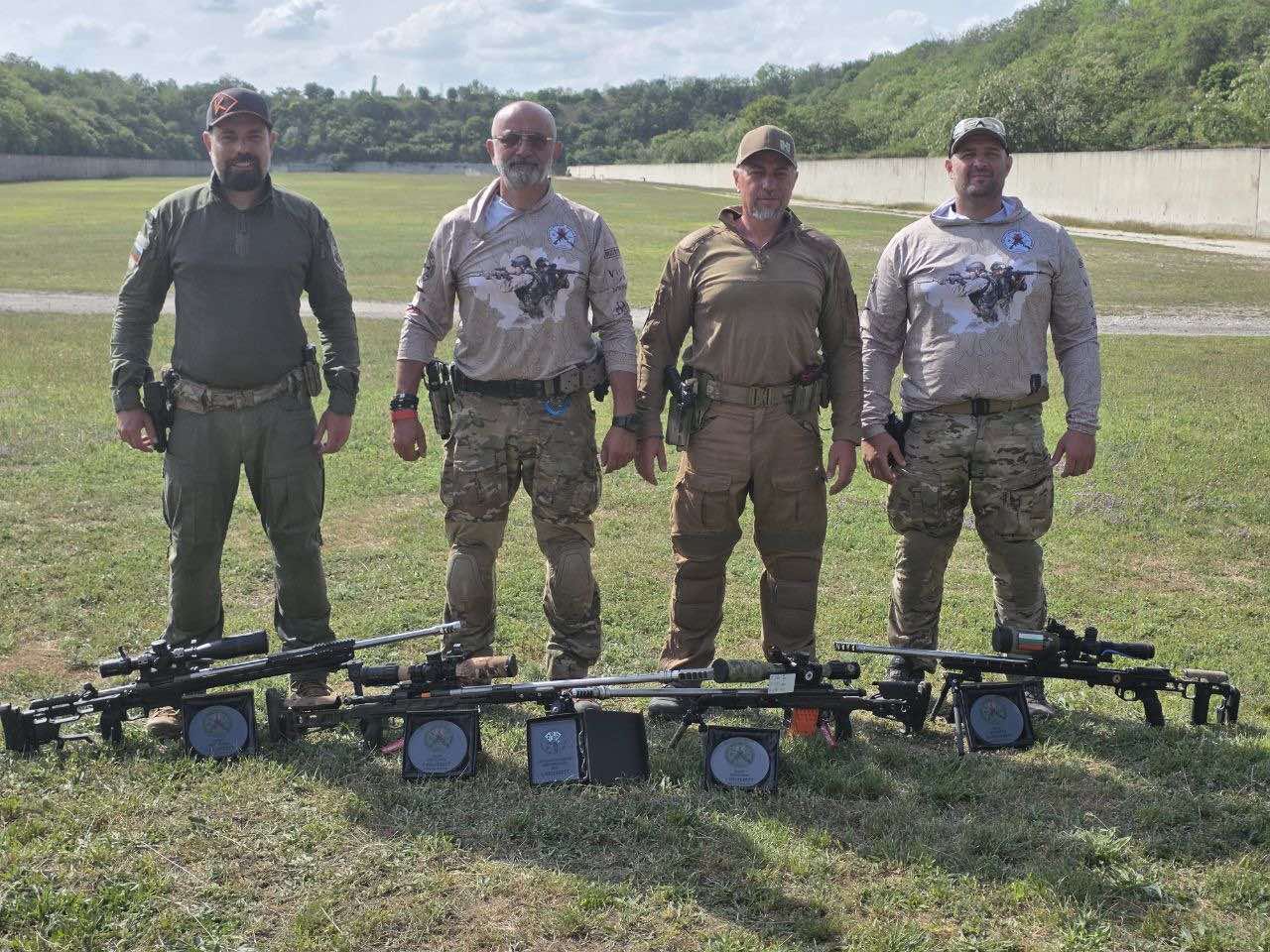
From left to right: Geno Andreev, Edwin Adamov, Georgi Vasilev, and Asen Vukadinov.
Field testing and expert feedback
Geno Andreev, Edwin Adamov, Georgi Vasilev, and Asen Vukadinov
Congratulations to Geno Andreev, Edwin Adamov, Georgi Vasilev, and Asen Vukadinov — competing as the two Bulgarian teams who took first and second place among 30 teams from 5 countries at the II. Tactical Sniper Challenge in Hungary,
an international competition for military and police snipers that is also open to sport shooters.
Special thanks for the time and effort they dedicated to field testing Wind Call, and for their invaluable advice and feedback during the development of the app.
The idea for Wind Call Spotter mode came personally from Asen Vukadinov and was implemented at his request.
Firearms and ammunition support
BulArms
Special thanks to BulArms for supplying the firearms and ammunition used during the development and field testing of Wind Call. We are grateful to the entire team and personally to Mr. Radev for their support.
Special thanks to the Long Range Precision team for providing equipment used during the development of Wind Call, and personally to Mr. Todorov for his assistance with the integration of CALYPSO ultrasonic anemometers for use with the app.
Special thanks to the Defence team for providing access to dozens of riflescopes with varying glass quality. They were used during the development and refinement of Wind Call’s mirage-reading workflow:
conversion of observed mirage into a usable crosswind value.
Their support made it possible to verify what works, when it works, when it does not, and what can realistically be achieved across scopes with different optical characteristics.